
CNC Machining Services: Automated Quoting and Geometric Analysis
CNC Machining Services increasingly depend on fast engineering analysis before production begins. When a customer submits a 3D CAD model and technical drawing for quotation, the manufacturer must evaluate material, dimensions, tolerances, feature geometry, machining accessibility, workholding, tooling and inspection requirements. Automated quoting and geometric analysis can help organize this information and identify potential manufacturing risks at an early stage. However, an automated quotation should not be treated as a replacement for engineering review. Complex geometries, tight tolerances, deep cavities, thin walls and special machining requirements may still require experienced technical evaluation. This article explains how Automated CNC Quoting works, what geometric information can be extracted from CAD models, how machining complexity affects estimated cost, and how engineers and purchasing teams can use automated analysis more effectively when selecting CNC Machining Services.
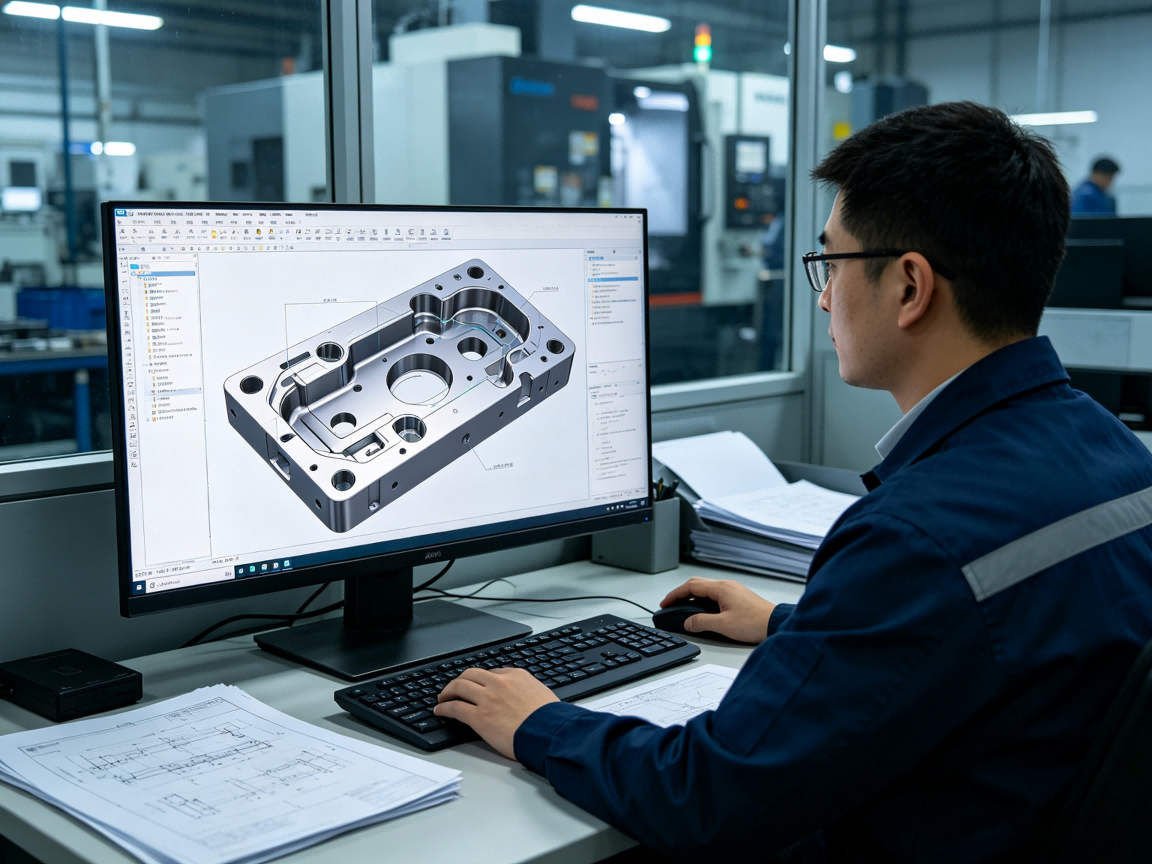
Automated CNC quoting is a process that uses digital part information to estimate manufacturing requirements and generate a preliminary machining quotation. Depending on the system, the analysis may examine a CAD model, identify geometric features and combine them with material, quantity, tolerance and finishing information.
The objective is to reduce the time required to move from a customer inquiry to an initial manufacturing estimate.
A typical automated quoting workflow may include:
Uploading a 3D CAD model
Uploading the technical drawing when available
Identifying the material
Entering production quantity
Specifying surface treatment or finishing requirements
Analyzing part geometry
Estimating machining operations
Evaluating tooling and setup requirements
Calculating estimated production time
Generating a preliminary quotation
The actual workflow varies according to the software, manufacturing system and supplier capabilities.
A CNC quotation cannot be based only on the overall dimensions or weight of a component. Two parts with similar external dimensions can have very different machining requirements.
For example, one component may have simple external surfaces and several easily accessible holes. Another may contain deep pockets, narrow slots, small internal radii, angled surfaces and tight positional tolerances. The second component can require significantly more machining operations even if its overall size is similar.
Geometric analysis helps identify these differences before production planning begins.
| Geometric Factor | Manufacturing Influence | Potential Quotation Impact |
|---|---|---|
| Overall Size | Influences machine capacity and workholding | May affect machine selection and setup |
| Feature Count | Increases machining operations | Can increase cycle time |
| Deep Cavities | May require extended-reach tooling | Can increase machining complexity |
| Small Internal Radii | May require smaller cutters | Can increase finishing time |
| Angled Features | May require additional orientations | Can influence setup and programming cost |
| Tight Tolerances | Require stronger process control | Can increase inspection and machining requirements |
pemVerify all parameters against current test reports and applicable standards before use in specifications.emp
The 3D CAD model contains important information about the physical geometry of a CNC component. Automated systems can analyze surfaces, holes, pockets, slots, edges and other geometric features to help estimate machining requirements.
Commonly analyzed characteristics may include:
Part dimensions
Bounding box size
Machined surface area
Hole diameter and depth
Pocket depth
Slot width
Internal corner radius
Angled surfaces
Curved surfaces
Feature accessibility
The more complete and accurate the digital model is, the more useful the automated analysis can become.
However, geometry alone cannot always determine the complete manufacturing process. The CAD model may not contain information about critical functional tolerances, surface requirements, material condition or inspection criteria. This is why a technical drawing remains important for many CNC projects.
A 3D model primarily describes geometry, while a technical drawing often provides manufacturing requirements that are not obvious from geometry alone.
These may include:
Dimensional tolerances
Geometric tolerances
Datum references
Surface roughness requirements
Thread specifications
Material requirements
Heat treatment requirements
Surface treatment requirements
Critical inspection dimensions
Assembly-related requirements
An automated quoting system may identify the physical presence of a hole, but it may not fully understand the functional significance of its positional tolerance without drawing information.
For this reason, engineers should provide both the CAD model and technical drawing whenever possible.
Automated geometric analysis can classify features and associate them with possible machining operations. A through-hole may be associated with drilling or boring. A pocket may require roughing and finishing. A threaded hole may require tapping or Thread Milling.
Feature recognition can help create an initial process estimate.
| Feature | Possible CNC Operation | Key Engineering Consideration |
|---|---|---|
| Flat Surface | Face Milling | Tool diameter and surface finish |
| Hole | Drilling, Boring or Reaming | Diameter, depth and tolerance |
| Threaded Hole | Tapping or Thread Milling | Thread specification and depth |
| Roughing and Finishing | Depth, corner radius and accessibility | |
| Slot | Slot Milling | Width, depth and cutter access |
| Angled Surface | 3+2 or Multi-Axis Machining | Tool orientation and setup |
pemVerify all parameters against current test reports and applicable standards before use in specifications.emp
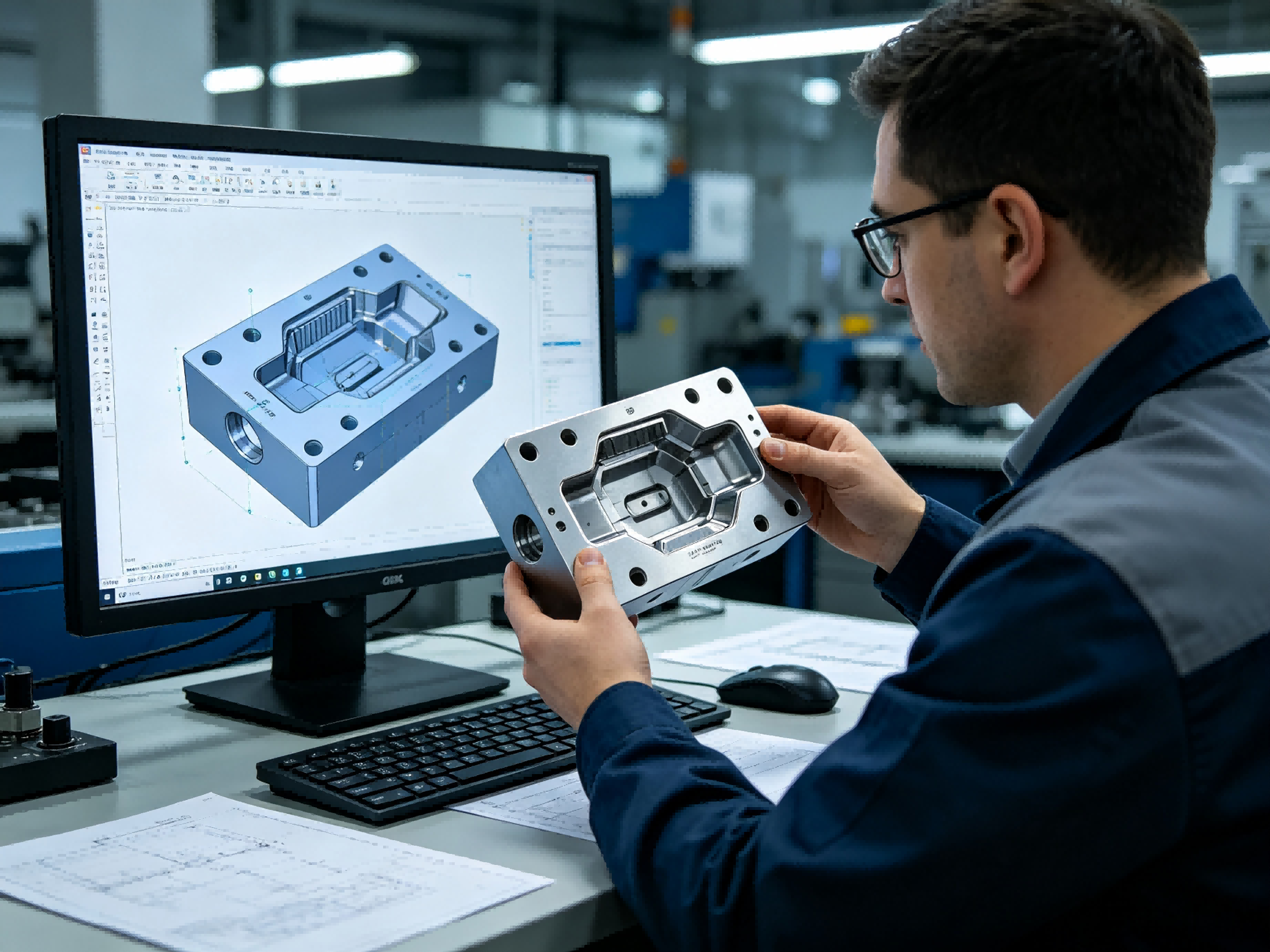
The complexity of a component has a direct relationship with quotation accuracy. Simple prismatic components can often be analyzed relatively efficiently because the machining operations are straightforward.
Complex components can be more difficult because the actual manufacturing strategy depends on tool accessibility, workholding and machining sequence.
Factors that can increase complexity include:
Deep and narrow cavities
Thin walls
Small internal radii
Multiple angled surfaces
Complex three-dimensional contours
Large numbers of holes
Cross-drilled features
Strict dimensional tolerances
Multiple datum relationships
Several required setups
Automated analysis can identify many of these conditions, but the final process plan may still require experienced engineering judgment.
Material is another major variable in CNC Machining Services. Machining aluminum, carbon steel, stainless steel, engineering plastics and other materials can involve different cutting strategies and tooling requirements.
Material influences cutting speed, feed rate, tool wear, chip evacuation and surface finish. It can therefore affect machining time and tooling consumption.
An automated quotation system should receive accurate material information. If the material is unknown or only described generically, the resulting estimate may not accurately represent the final machining process.
Production quantity strongly affects the economics of CNC machining. A single prototype and a larger low-volume batch may use similar machining equipment but have different setup and programming cost structures.
For prototype machining, engineering preparation can represent a larger portion of total cost. For repeated production, setup and programming effort can be distributed across more parts.
Quantity can therefore influence:
Fixture investment
Setup allocation
Tooling strategy
Programming efficiency
Inspection frequency
Batch production planning
Automated quoting systems can incorporate quantity into an initial estimate, but production planning should still consider the actual process strategy.
The number of setups is an important factor in CNC manufacturing. Each setup requires workholding, datum establishment, machine positioning and inspection.
A component that can be machined in one setup may be considerably simpler than a component requiring several orientations.
Geometric analysis can help identify surfaces that cannot be reached from the primary orientation. This information can contribute to setup estimation.
However, setup planning is not always determined by geometry alone. Fixture accessibility, machine configuration and production volume can also influence the preferred process.
Tool accessibility connects automated quoting with the DFM principles discussed in the previous article.
A CAD model may contain a deep pocket that appears simple visually. Automated analysis can identify its depth and opening dimensions, but the practical machining solution depends on tool diameter, tool length, holder clearance and material.
When the required tool has excessive overhang, the manufacturer may need to modify the toolpath, change the setup or use another machining strategy.
Therefore, geometric analysis should be considered an early screening process rather than a complete replacement for manufacturing engineering.
Tolerance requirements can significantly influence CNC Machining Services. A component with general dimensional tolerances may require a different process from a component with several tightly controlled functional dimensions.
Tight tolerances can require:
More controlled machining parameters
Additional finishing operations
Stable workholding
Tool wear monitoring
Temperature control
Additional dimensional inspection
An automated quotation should therefore account for available drawing information rather than estimating cost only from the 3D geometry.
Surface finish can also influence machining time and process planning. Roughing operations are generally focused on efficient material removal, while finishing operations are used to achieve the required final surface condition.
If a component requires extensive finishing, the machining process may involve additional passes or specialized tools.
Surface treatment after machining can also affect the final dimensions. If the quotation includes anodizing, plating, coating or another finishing process, the supplier should understand which surfaces and dimensions are functionally important.
Automated quoting can be particularly useful during prototype development because engineers may need to compare several design iterations quickly.
When a CAD model changes, a new quotation can provide an updated estimate based on the revised geometry and quantity. This allows engineering teams to identify whether a design modification has created additional manufacturing complexity.
For example, increasing a pocket depth or reducing an internal radius may appear minor from a product design perspective but can significantly change tool accessibility.
Early quotation feedback can therefore support DFM decisions before the design is released for production.
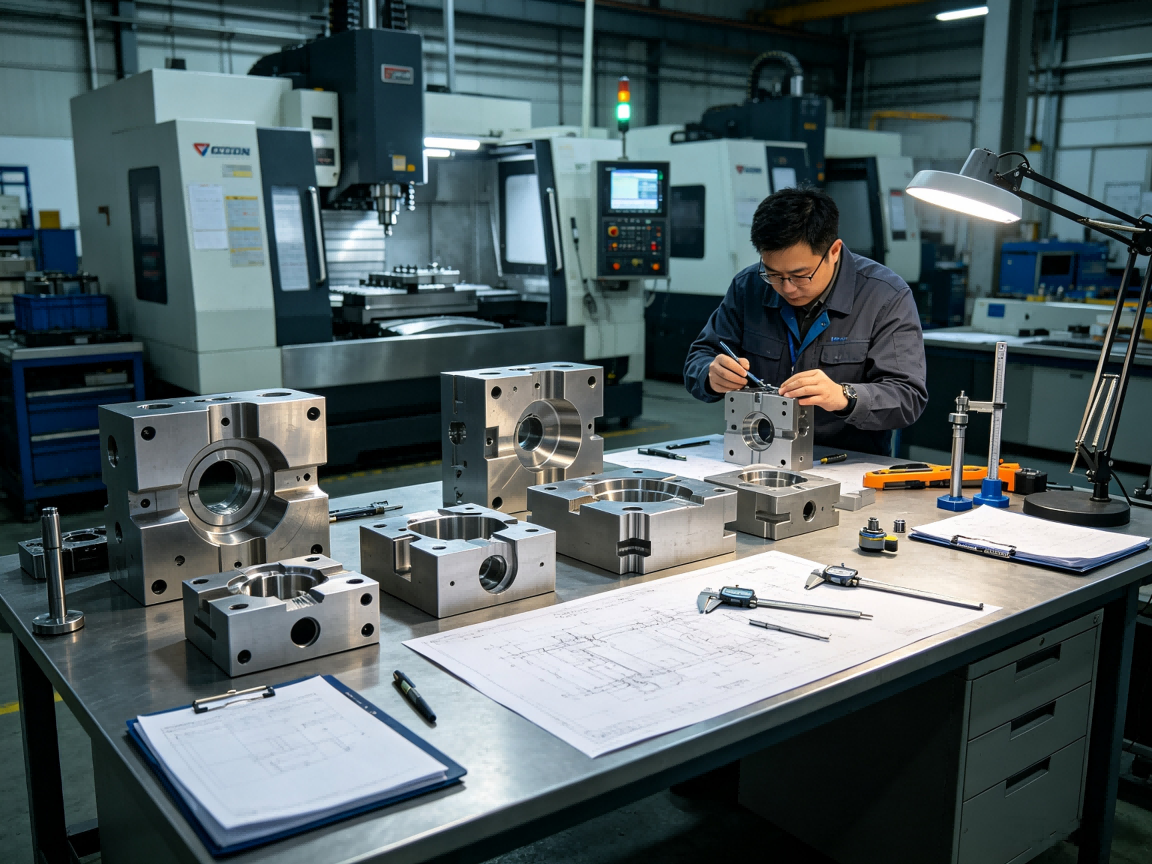
Low-volume CNC production benefits from accurate early estimation because setup and engineering costs can represent a meaningful part of the overall manufacturing cost.
For repeated components, the manufacturer may optimize fixture design, tool selection and machining sequence after the initial production runs.
The first quotation should therefore be viewed as part of the engineering process rather than simply a price document.
Automated quotation systems can process large amounts of geometric information quickly, but they have limitations.
Some manufacturing factors are difficult to determine solely from a CAD model:
Actual material condition
Machine-specific limitations
Fixture availability
Tool inventory
Operator experience
Inspection strategy
Production scheduling
Special customer requirements
For highly complex parts, engineering review remains important before a final manufacturing commitment is made.
Customers can improve quotation accuracy by providing complete and consistent technical information.
Provide the latest CAD model.
Provide the corresponding technical drawing.
Specify the exact material grade or required material specification.
Identify critical dimensions and tolerances.
Specify surface finish requirements.
Provide thread information where applicable.
Specify post-processing requirements.
State the required production quantity.
Identify critical functional surfaces.
Explain important assembly or application requirements.
Complete information reduces uncertainty during manufacturing evaluation.

The most practical approach is to combine automated analysis with human engineering review.
Automated systems are effective at rapidly processing geometry and identifying standard features. Engineers provide context by evaluating manufacturing risks, machine capability, tooling, workholding and inspection requirements.
| Automated Analysis | Engineering Review |
|---|---|
| Feature recognition | Machining strategy |
| Part dimensions | Machine selection |
| Hole and pocket identification | Tool selection |
| Geometry complexity screening | Workholding strategy |
| Preliminary cycle estimation | Process validation |
| Basic quotation generation | Final technical quotation |
pemVerify all parameters against current test reports and applicable standards before use in specifications.emp
Purchasing teams should not compare CNC quotations based only on the final price. The quotation should be evaluated together with the manufacturing scope and technical assumptions.
Important questions include:
Is the material clearly specified?
Are all machining features included?
Are required tolerances understood?
Are surface finishes included?
Are post-processing requirements included?
Is dimensional inspection included where required?
Does the quotation assume a particular quantity?
Are tooling or fixture costs included?
Are production and delivery conditions clearly defined?
A transparent quotation makes later production communication easier.
Dongguan city Jifan Precision Machinery Co., Ltd provides CNC Machining Services for customized components, prototype development and production machining. The company combines automated production lines with engineering and customization capabilities to support projects involving different component geometries and manufacturing requirements.
For complex components, manufacturing evaluation can consider CAD geometry, tooling accessibility, machining sequence, workholding and dimensional inspection before production.
A 3D CAD model, technical drawing, material, quantity, tolerance requirements, surface finish and post-processing information can significantly improve quotation accuracy.
No. Automated analysis can accelerate geometry evaluation and preliminary cost estimation, but complex parts may still require engineering review of tooling, machine capability, workholding and inspection.
Not necessarily. Cost depends on material, quantity, tolerance, tool accessibility, machining strategy, setup count, inspection and other manufacturing conditions.
The CAD model defines physical geometry, while the technical drawing can provide tolerances, datums, surface requirements and other manufacturing information that may not be fully represented by geometry alone.
It can identify many geometric conditions such as deep pockets, narrow features and complex surfaces. However, final manufacturability should be confirmed through engineering evaluation.
Automated quoting and geometric analysis can make CNC Machining Services more efficient by accelerating the evaluation of CAD models, identifying geometric features and creating preliminary manufacturing estimates. They are particularly useful during prototype development and low-volume production, where engineers may need to evaluate design changes quickly.
However, automated analysis should work together with engineering judgment. Tool accessibility, material behavior, workholding, machine capability, tolerance requirements, inspection strategy and production quantity all influence the final manufacturing process.
For engineers and purchasing teams, the most useful approach is to treat automated quoting as an early technical evaluation rather than simply a price-generation tool. Providing complete CAD and drawing information and reviewing the manufacturing assumptions behind a quotation can improve communication, reduce unexpected production changes and support more predictable CNC Machining Services.
Share your project parameters for a technical review.
Ta strona korzysta z plików cookie, aby zapewnić najlepszą jakość korzystania z naszej witryny.

 English
 Español
 Portugues
 Pусский
 Français
 Deutsch
 日本語
日本語 한국어
한국어 العربية
 Italiano
 Nederlands
 Svenska
 ไทย
ไทย Türk dili
 Indonesia
 Tiếng Việt
 čeština
 Română
 Suomalainen


Komentarz
(0)